Direct Push Drilling
Fast, cost-effective direct push technology for soil profiling, discrete groundwater sampling, and injection point installation — ideal for rapid environmental site characterization.
Applications
- Rapid site characterization and soil profiling
- Groundwater sampling at discrete depth intervals
- Soil gas and vapor surveys
- Contaminant plume delineation
- Injection point installation for in situ remediation
- Temporary groundwater monitoring points
- Hydraulic profiling for aquifer characterization
- Expedited site assessments
Key Advantages
- Minimal site disturbance — small footprint
- Rapid advancement with no drill cuttings
- Lower cost per boring compared to conventional drilling
- Discrete depth groundwater and soil sampling
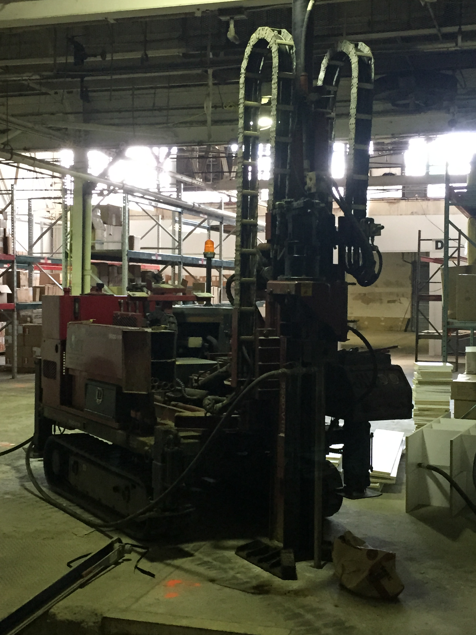
- Ideal for tight access and low-clearance locations
- Real-time data collection during advancement
- Compatible with MIP, HPT, and EC logging tools
About Direct Push Drilling
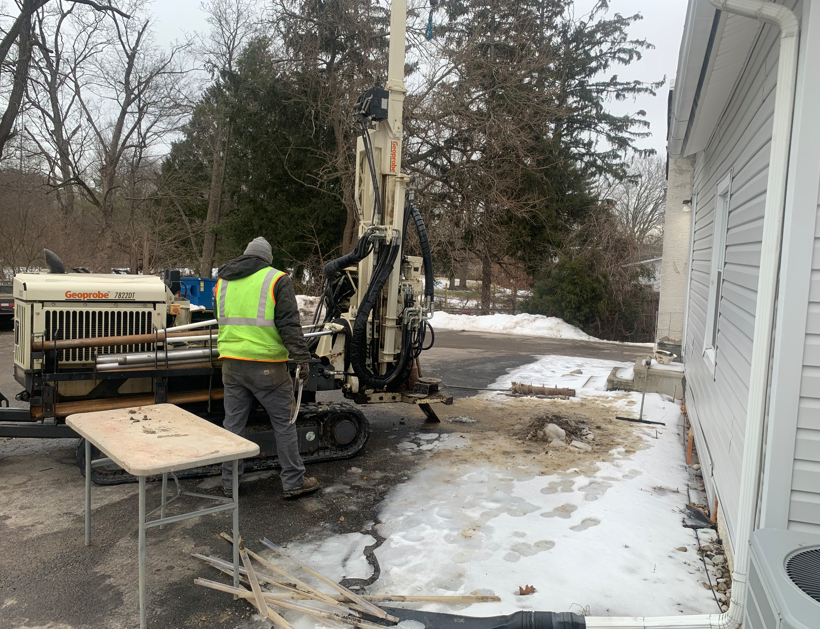
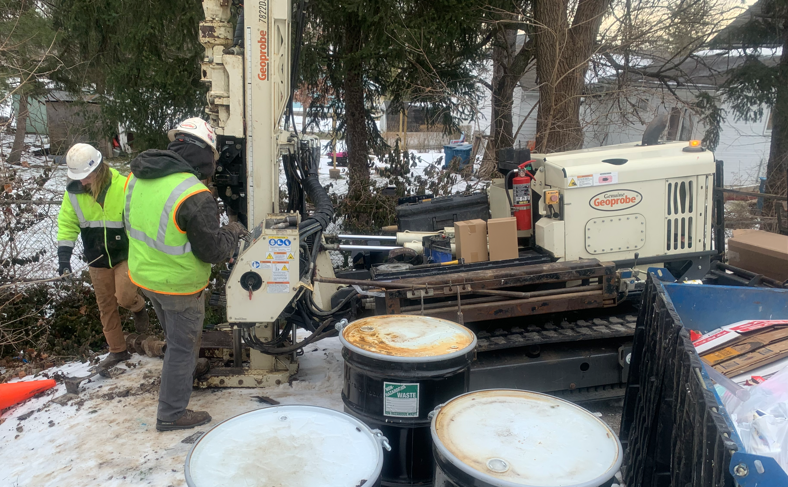
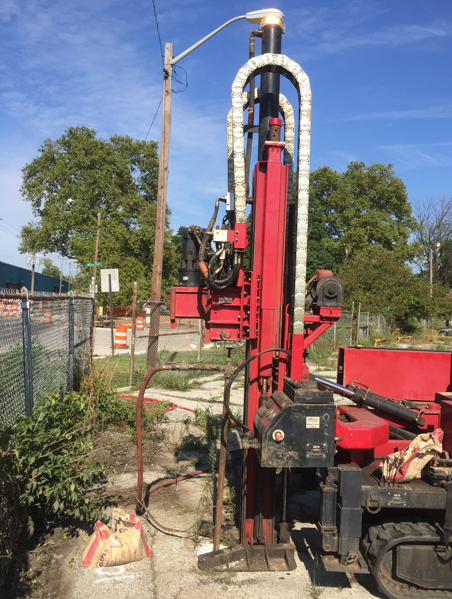
Direct push drilling uses hydraulic pressure and percussion to advance small-diameter probes and sampling tools into the subsurface without the need for a drill stem or drill cuttings. IET operates a large fleet of Geoprobe and AMS direct push rigs, enabling rapid mobilization and efficient data collection at environmental sites across the country.
Direct push methods are especially valuable for in situ remediation programs, where injection points must be installed at precise depth intervals across a contaminated plume. IET has completed thousands of direct push borings for soil and groundwater sampling, contaminant plume delineation, soil vapor extraction, and reagent injection as part of ISCO, ERD, and ISCR remediation programs.
Direct Push Drilling Projects
Direct Push Drilling — Frequently Asked Questions
Answers to common questions about IET's direct push (Geoprobe) drilling services for environmental site characterization, sampling, and remediation injection.
What is direct push drilling and when is it used?
Direct push drilling uses percussion and hydraulic force to advance steel rods into the ground without rotation or drill cuttings, collecting continuous soil cores, discrete-depth groundwater samples, and soil gas data. It is ideal for rapid environmental site characterization, contaminant plume delineation, and installing injection points for in situ remediation.
How deep can direct push drilling reach?
Direct push typically reaches 50–100 feet in most soils and can extend beyond 150 feet in favorable geology. Maximum depth depends on soil density, refusal at bedrock or boulders, and rig capacity. IET operates multiple Geoprobe direct push units matched to your site conditions.
What are the advantages of direct push over hollow-stem auger drilling?
Direct push produces no drill cuttings, minimizes site disturbance, advances faster, lowers cost per boring, enables discrete-depth sampling, supports real-time logging tools (MIP, HPT, EC), and can access tight or low-clearance indoor and industrial settings where conventional rigs cannot fit.
Can direct push be used for in situ remediation injections?
Yes. IET installs injection points via direct push and can directly inject ISCO, bioremediation, and ISCR reagents — including activated persulfate, permanganate, zero valent iron, and electron donors — without installing permanent wells, accelerating remediation delivery.
Does IET provide direct push drilling nationwide?
Yes. IET mobilizes direct push and Geoprobe crews nationwide from offices in Pennsylvania, Ohio, Texas, South Carolina, North Carolina, and Florida, supporting Phase II ESAs, groundwater monitoring, and remediation injection programs across the United States.