888-721-8283

In Situ Remediation Contractor

ISCO, ISCR, Bioremediation, EZVI & NAPL Treatment — expert in situ remediation contractor services for chlorinated solvents, petroleum & heavy metals. Free consultation.

In situ remediation treats contaminated soil and groundwater where it lies, without excavation. IET is an in situ remediation contractor that designs the remedy, writes the work plan, and puts its own crews and rigs in the field — ISCO, ISCR, enhanced bioremediation, EZVI and NAPL source treatment delivered nationwide since 1998. Across 3,500+ sites remediated, IET holds 14 active US patents for the injection and stabilization technologies it deploys, so the treatment on your site is designed by the company that developed it rather than a reagent supplier working from a catalog.

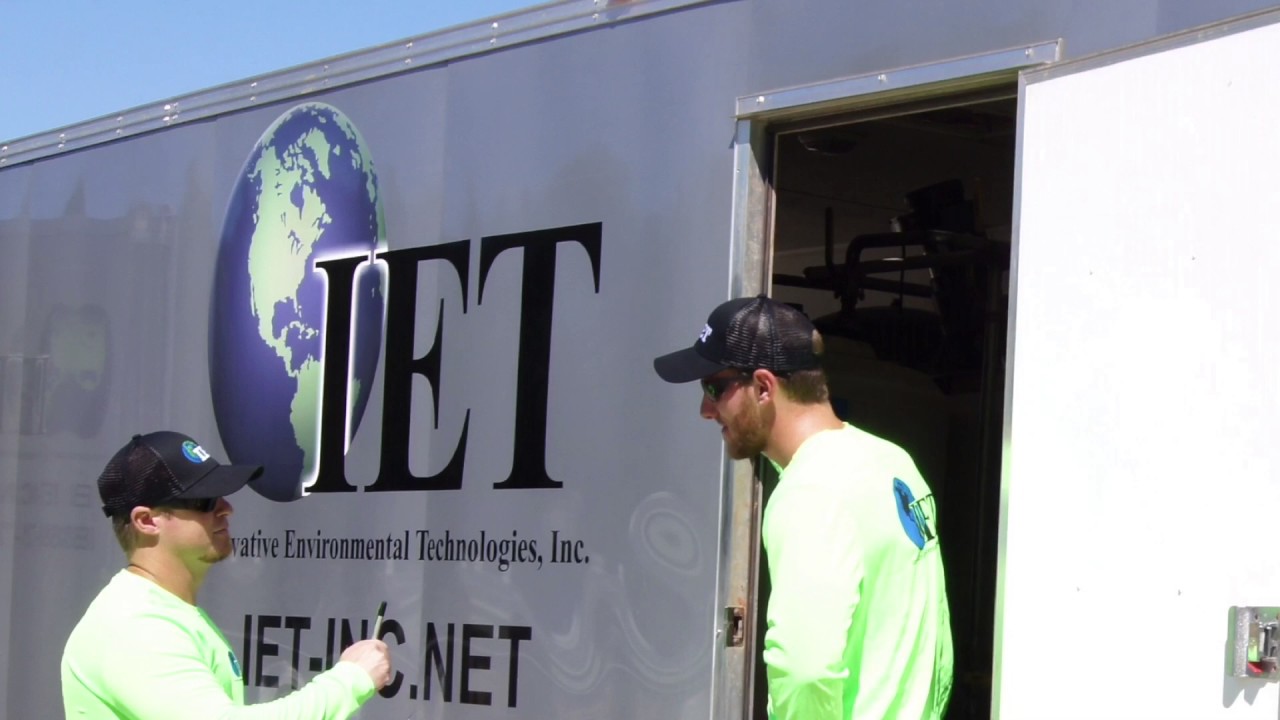
On Site: IET Field Operations

IET's own crews, rigs and injection tooling — not a reagent catalog shipped to a subcontractor.

Aerial view of a large IET in situ remediation site with multiple treatment zones, equipment trailers and dirt access roads bordered by forest
Aerial view of an active in situ treatment area. Each cluster of trailers and rigs is a separate injection zone, staged along the site roads so the work moves without re-mobilizing.
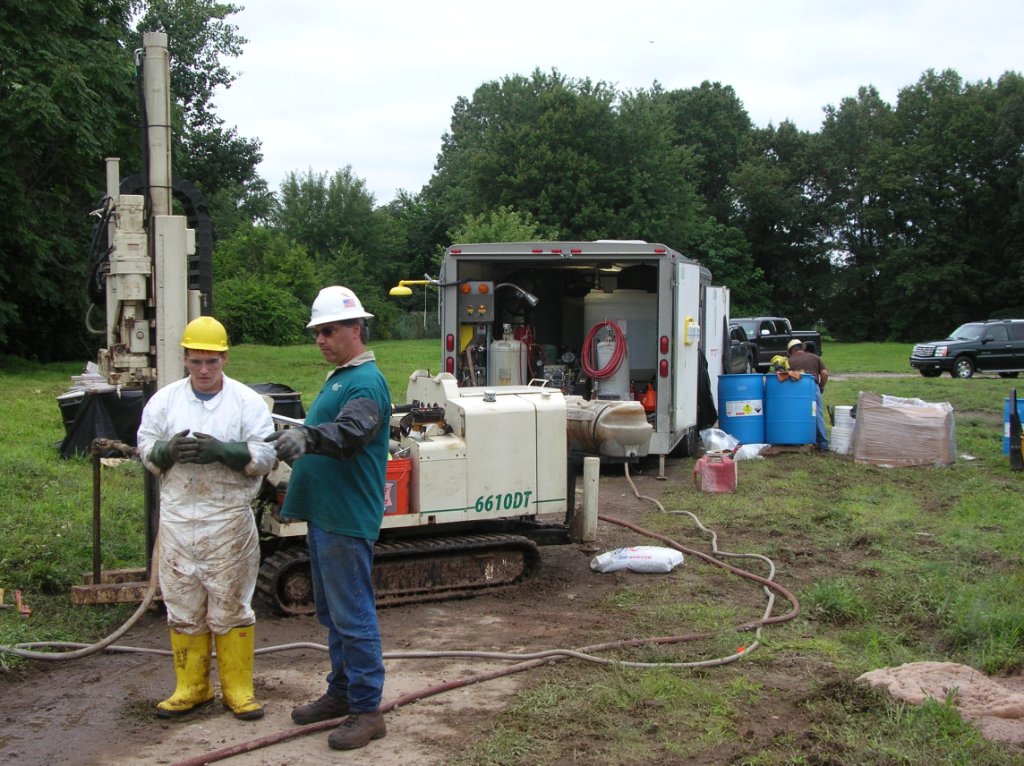
IET field crew running amendment hose from an equipment trailer to a track-mounted direct push injection rig on a remediation site
Direct push injection: amendment hose running from the IET equipment trailer to the probe rig, with reagent pallets staged nearby.
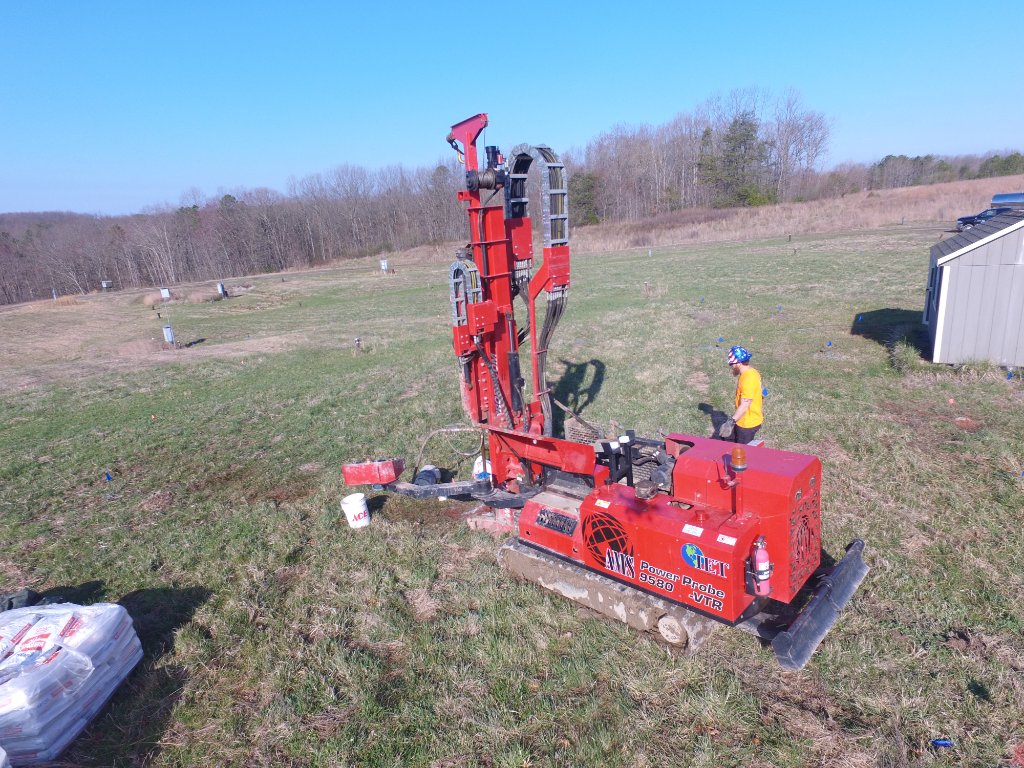
Red AMS Power Probe 9580-VTR track-mounted direct push drilling rig with IET logo staged for amendment injection in a grassy field
IET’s track-mounted AMS Power Probe 9580-VTR, rigged for direct push injection.
IET equipment trailer, reagent totes and traffic cones on an active environmental remediation site with field crew working nearby
Mobilization: equipment trailer, reagent totes and traffic control on a working site.
Two IET drilling and injection rigs working a source area with wrapped reagent pallets and a containment tarp on the ground
Two rigs working one source area, with reagent pallets wrapped and tarped between passes.
Aerial view of an IET remediation site staging area with branded equipment trailer, water tanks, canopy tents, two red track rigs and pallets of bagged reagent beside a shipping container
Staging area: IET trailer, water tanks, reagent pallets and both rigs, all inside one fenced work clearing.
High aerial view of the full IET in situ treatment area showing drill rigs, equipment trailers, canopy tents, support trucks and access tracks surrounded by forest
The whole treatment area in one frame — rigs, trailers and support trucks laid out along the site tracks.
IET track-mounted direct push rig surrounded by pallets of bagged reagent with three white pickup trucks on the dirt access track into the clearing
Reagent staged at the rig so injection passes run without hauling bags from the trailer.
Wide aerial of an IET injection site showing canopy tents, water tanks, drilling rigs, parked trucks, a yellow well riser marker and an injection hose line running across dry grass
Hose runs and yellow riser markers trace where the injection points sit across the treatment area.
Aerial view of an IET branded equipment trailer with two red track drilling rigs, blue water storage tanks, canopy tents and pickup trucks at a remediation site
IET trailer, twin track rigs and water supply — one self-contained injection spread.
Overhead view of an IET remediation site with a red rig and reagent pallets at one end, a second rig mid-field, IET equipment trailer, two canopy tents, water tanks and a small tracked rig
Two injection fronts running at once, each served by its own tent, water tank and reagent stack.
Aerial view of two IET track rigs connected by a network of black injection hoses, with a monitoring well riser marked by a yellow pipe in the foreground
Black injection hose connecting both rigs, with a monumented well riser marked in the foreground.
Close aerial of an IET equipment trailer, a red direct push rig with pallets of bagged reagent in front of it, a canopy tent with a crew member, a gas cylinder rack and support trucks
Rig, reagent pallets and crew canopy at a working injection point, with the gas cylinder rack alongside.

In-Situ Remediation Delivery Strategies

Direct push injections, permanent well systems & in-situ soil mixing — the right approach for every contaminated site

IET direct push injection equipment used for in-situ chemical oxidation and groundwater remediation

Direct Push Injections

IET delivers patented injection techniques that are field proven and results driven. Our injection tooling is designed in-house and has been field tested by over 20 years of injection experience.

Key Benefits
No waste streams
Flexible design
Accelerated reduction of target compound concentrations
Suitable for various formations: sand, silt, clay, glacial till

In Situ Remediation Techniques Compared

Every in-situ technique IET deploys — explained by the engineers who design and permit them, with the contaminant, timeframe and target zone each one is suited to.

ISCO

In-Situ Chemical Oxidation (ISCO)

Destroy organic contaminants underground using powerful chemical oxidants.

How It Works

ISCO introduces chemical oxidants directly into contaminated soil and groundwater to chemically destroy organic contaminants on contact. Three primary oxidants are used in environmental remediation: • Activated Persulfate — IET's patented ferric iron-activated persulfate generates sulfate radicals that aggressively oxidize chlorinated solvents and petroleum hydrocarbons, providing sustained treatment for 12–24+ months from a single injection event. • Potassium Permanganate — A strong oxidant effective against chlorinated ethenes (TCE, PCE). Produces stable MnO₂ precipitate used by IET's ISGS technology for NAPL flux reduction. • Catalyzed Hydrogen Peroxide (Fenton's Reagent) — Fast-acting and aggressive, ideal for petroleum hydrocarbons and BTEX. Requires careful pH management and is best for source zone treatment.

Detailed ISCO page

Contaminants Treated

  • TCE / PCE / DCE / Vinyl Chloride
  • BTEX / Petroleum Hydrocarbons
  • DNAPL / NAPL Source Zones
  • PAHs / Creosote
  • MTBE
  • Mixed Organics

Key Advantages

  • Rapid mass reduction (weeks to months)
  • Destroys contaminants — no waste transfer
  • Patented 2+ year sustained oxidation
  • Compatible with follow-on bioremediation
ERD / Bioremediation

Enhanced Reductive Dechlorination (ERD) & Bioremediation

Harness microbial populations to biodegrade contaminants over time.

How It Works

Enhanced Reductive Dechlorination (ERD) stimulates anaerobic microorganisms to sequentially strip chlorine atoms from chlorinated solvents (TCE → DCE → vinyl chloride → ethene). Electron donor substrates create the reducing environment required: • Emulsified Vegetable Oil (EVO) — Long-lasting (3–7 years) slow-release substrate. IET's Provect ERD formulations are specifically engineered for sustained ERD performance. • Bioaugmentation — When sites lack sufficient native dechlorinating organisms, IET injects specialized cultures (KB-1®, SDC-9®) containing Dehalococcoides (DHC) bacteria that drive complete dechlorination to ethene. • Aerobic Bioremediation — For petroleum hydrocarbons and BTEX, oxygen-releasing compounds or air sparging stimulate aerobic degradation by native bacteria.

Detailed ERD / Bioremediation page

Contaminants Treated

  • TCE / PCE / DCE / Vinyl Chloride (anaerobic)
  • BTEX / Gasoline / Diesel (aerobic)
  • Petroleum Hydrocarbons
  • MTBE (aerobic/co-metabolic)

Key Advantages

  • Most cost-effective for dilute dissolved plumes
  • Long treatment duration from single injection
  • Achieves complete mineralization to ethene
  • Works synergistically with ISCO pre-treatment
ISCR

In-Situ Chemical Reduction (ISCR)

Transform chlorinated solvents and heavy metals through reductive chemistry.

How It Works

ISCR uses reducing agents to chemically transform contaminants via electron transfer reactions — the opposite mechanism from oxidation. Key reducing amendments include: • Zero Valent Iron (ZVI) — Metallic iron donates electrons to chlorinated solvents, breaking C-Cl bonds through abiotic dechlorination. Also reduces hexavalent chromium Cr(VI) to immobile Cr(III). • Nano-Scale ZVI (nZVI) — Sub-micron iron particles with enormously increased reactive surface area, deliverable via direct push or recirculation to reach deep DNAPL source zones. • Sodium Dithionite — Creates a strongly reducing subsurface zone that persists for years, providing long-term conditions for contaminant destruction and metal immobilization. ISCR is the preferred approach when oxidizing agents are contraindicated — for example, at sites where ISCO could mobilize co-contaminant metals.

Detailed ISCR page

Contaminants Treated

  • TCE / PCE / DCE (abiotic dechlorination)
  • Hexavalent Chromium Cr(VI)
  • Uranium and Technetium
  • Mixed chlorinated + metals plumes

Key Advantages

  • No oxidant mobility concerns for metals sites
  • Long-term sustained reducing conditions (5–10 yrs)
  • Abiotic + biotic combined degradation with ZVI
  • Effective for Cr(VI) and mixed contamination
EZVI

Emulsified Zero Valent Iron (EZVI)

Deliver iron directly into DNAPL source zones via oil-encapsulated nanoparticles.

How It Works

EZVI is a NASA-licensed technology consisting of nano-scale zero valent iron particles encapsulated in a biodegradable oil-in-water emulsion. This formulation exploits a critical chemical principle: like dissolves like. When injected near chlorinated DNAPL (e.g., TCE or PCE pools), the oil phase of EZVI preferentially partitions into the NAPL, carrying the reactive iron directly to the contaminant source. Degradation occurs through two simultaneous mechanisms: 1. Abiotic Chemical Reduction — ZVI directly dehalogenates chlorinated DNAPL molecules. 2. Biotic Reductive Dechlorination — The oil phase serves as a long-term electron donor for indigenous or augmented Dehalococcoides bacteria. This dual mechanism makes EZVI uniquely effective for deep DNAPL source zones that are largely inaccessible to purely aqueous-phase amendments.

Detailed EZVI page

Contaminants Treated

  • Chlorinated DNAPL (TCE, PCE free phase)
  • Residual NAPL in soil pores
  • High-concentration chlorinated solvent source zones

Key Advantages

  • Directly contacts and partitions into DNAPL
  • Dual abiotic + biotic degradation pathways
  • Provides long-term electron donor for ERD
  • NASA-licensed; deployed nationally by IET
ISGS

In-Situ Geochemical Stabilization (ISGS)

Place treatment reagents directly into contaminated soil to overcome injection limits.

How It Works

ISGS (licensed exclusively by IET from Evonik) applies modified permanganate reagent solutions through mechanical soil mixing or horizontal directional drilling (HDD) injection into NAPL-impacted source zones. The oxidant migrates through the treatment area, destroying dissolved-phase organics and chemically weathering NAPL residuals — progressively reducing viscosity, solubility, and flux into groundwater. The MnO₂ precipitate formed during oxidation accumulates along the NAPL front, further restricting contaminant migration. IET performed the first-of-its-kind unidirectional HDD injection of ISGS reagent at a NJ Superfund site — delivering over 100,000 gallons of treatment beneath an active highway, demonstrating that ISGS can reach zones inaccessible to vertical drilling.

Detailed ISGS page

Contaminants Treated

  • NAPL / DNAPL Source Zones
  • MGP / Coal Tar / Creosote
  • PAHs in low-permeability soils
  • Mixed NAPL + dissolved-phase sites

Key Advantages

  • Treats zones inaccessible to standard injection
  • Licensed exclusively in North America by IET
  • HDD delivery under structures/highways
  • Mass removal + long-term flux reduction
NAPL Treatment

NAPL & Source Zone Treatment

Eliminate the persistent source driving dissolved-phase groundwater plumes.

How It Works

NAPL (non-aqueous phase liquid) source zones are the dominant driver of persistent, long-lived groundwater contamination. Without source treatment, dissolved plumes persist for decades even with pump-and-treat management. IET's NAPL treatment strategy depends on NAPL type: • Chlorinated DNAPL (TCE/PCE pools) — EZVI for direct source contact, high-concentration ISCO persulfate or permanganate for residual DNAPL oxidation, and ISGS delivered by soil mixing or injection for source-zone stabilization. • Petroleum LNAPL (gasoline, diesel free product) — ISCO (hydrogen peroxide), aerobic bioremediation, or SVE/AS depending on depth and soil type. • Coal Tar / Creosote (MGP sites) — ISGS (In Situ Geochemical Stabilization), delivered by soil mixing or direct-push injection, is IET's primary approach for high-viscosity, high-mass NAPL at manufactured gas plant sites.

Detailed NAPL Treatment page

Contaminants Treated

  • Chlorinated DNAPL (TCE, PCE, 1,1,1-TCA)
  • Petroleum LNAPL (gasoline, diesel, fuel oil — BTEX)
  • Coal tar and creosote (MGP sites)
  • Mixed NAPL with dissolved-phase plumes

Key Advantages

  • Addresses root cause of persistent plumes
  • Reduces dissolved-phase loading long-term
  • Enables faster regulatory closure
  • Avoids excavation and landfill disposal costs

Technique Comparison at a Glance

Comparison of in situ remediation techniques by mechanism, treatment speed, and best treatment zone
TechniqueMechanismSpeedBest Zone
ISCOChemical oxidationWeeks–monthsSource + plume
ERD / BioremediationMicrobial degradation2–5 yearsDissolved plume
ISCRChemical reductionMonths–yearsSource + metals
EZVIChem. reduction + bio1–3 yearsDNAPL source zone
ISGSOxidation + stabilizationMonthsNAPL source zone
NAPL TreatmentTechnology-specificVariableSource zone

Comprehensive Remediation Solutions

IET provides full-spectrum environmental remediation — from industrial brownfields to groundwater treatment, combined technology programs, and remedial design characterization.

High Priority

Industrial Site Cleanup

IET specializes in remediation of complex industrial properties including manufacturing facilities, former gas stations, dry cleaners, chemical plants, and MGP sites. Our turn-key approach integrates site characterization, remedial design, technology selection, and full-scale implementation — managing the entire cleanup under one contract.

Brownfield Remediation

Brownfield Site Assessment & Cleanup

IET supports brownfield redevelopment by delivering cost-effective in-situ remediation that achieves regulatory closure and enables safe property reuse. Our engineers work alongside developers and environmental consultants to design targeted treatment programs that meet cleanup goals on schedule — from Phase II ESA through regulatory closure.

Groundwater Treatment

Groundwater Treatment Services

IET treats contaminated groundwater in situ — eliminating the need for pump-and-treat systems and their perpetual operating costs. In-situ approaches using ISCO, enhanced bioremediation, and ISCR destroy dissolved contaminants directly in the aquifer, reducing plume extent and achieving MCL-level cleanup goals in the saturated zone.

SVE & Air Sparging

Soil Vapor Extraction & Air Sparge Systems

IET designs and supports the installation of soil vapor extraction (SVE) systems and air sparge (AS) systems for volatile organic compound (VOC) removal from the vadose zone and groundwater. SVE/AS can be combined with bioremediation enhancements or ISCO for a synergistic treatment approach on petroleum and chlorinated solvent sites.

Combined Remedies

Combined & Sequential Remediation Technologies

Maximizing cleanup efficiency often requires combining multiple technologies. IET designs integrated programs — e.g., ISCO source zone destruction followed by enhanced bioremediation plume polishing — leveraging synergies between chemical, biological, and physical processes. One team, one mobilization, multi-mechanism treatment.

Remedial Design

Remedial Design Characterization

Effective remediation begins with detailed site characterization. IET conducts remedial design investigations including bedrock and overburden characterization, contaminant source delineation, DNAPL investigation, and hydrogeologic analysis to build treatment programs supported by site-specific data — not assumptions. We combine drilling, sampling, and advanced site assessment tools.

Need Site Investigation & Drilling?

IET operates 50+ specialized rigs — Geoprobe, CME, AMS & barge drilling for site characterization, monitoring wells, and amendment injection.

Injection & Soil Mixing: Technical Questions

Free Interactive Tool

Remediation Cost Estimator

Enter your site details for a rough, order-of-magnitude cost estimate for in situ remediation. This tool provides planning-level ranges — IET will provide a firm, site-specific proposal after reviewing your data.

Site Detail Inputs

Persulfate / permanganate / peroxide injection

Footprint of the contaminant plume or source zone

Vertical extent of contamination

Enter a treatment area and depth to see your estimated cost range.

This is a rough planning-level estimate only, not a quote or proposal. Actual costs vary based on site geology, access, contaminant concentrations, regulatory requirements, and number of injection events. Contact IET for a firm proposal.

In Situ Remediation: Frequently Asked Questions