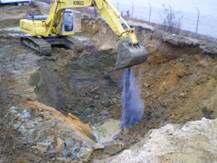
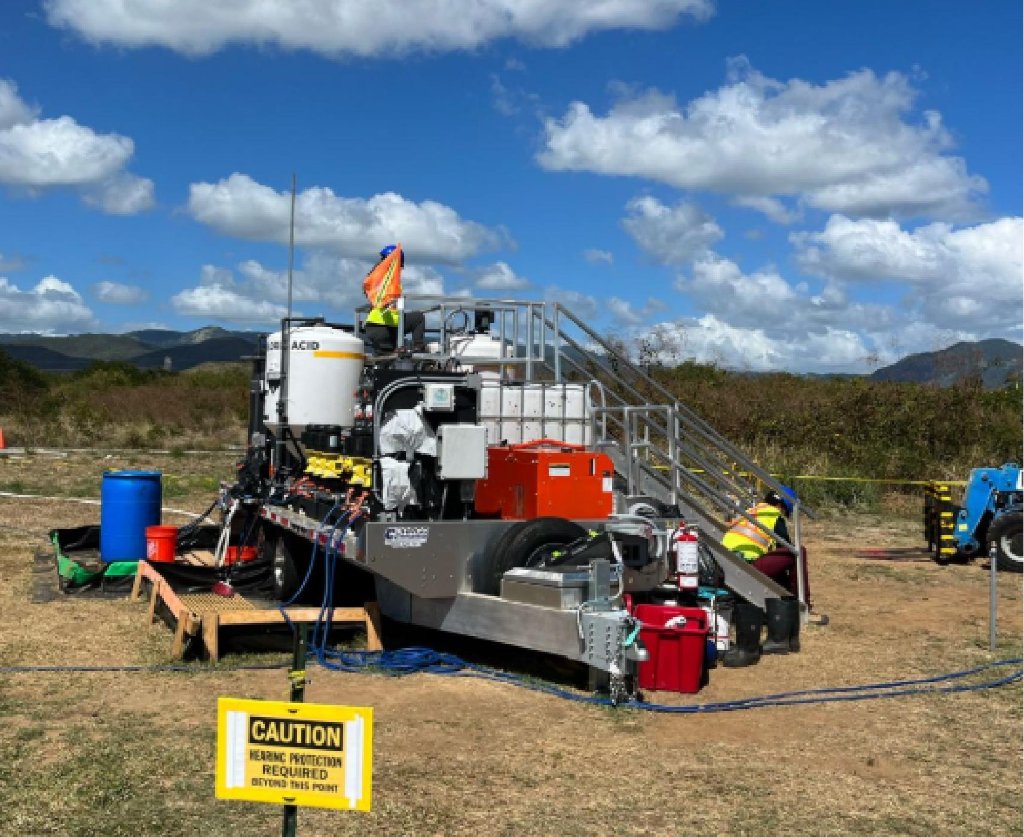
In situ remediation treats contamination underground instead of digging it up. That choice keeps an operating plant, a parking lot, or a highway in service through the project and removes the largest cost lines of a conventional cleanup: excavation, trucking, disposal fees, and backfill.
A contractor's job is not to sell reagent. It is to decide which chemistry fits the contaminant and the geology, how much of it is needed, where it must physically land, and how the result will be proven. IET has been doing exactly that since 1998, across chlorinated solvents, petroleum hydrocarbons, coal tar and creosote, NAPL and DNAPL sources, and heavy metals.
Programs are sized from site data. Where the geology will not accept fluid — tight clays, weathered rock, high-mass NAPL — we change the delivery, not the promise, and blend reagent mechanically through soil mixing.
 Translate